






Apple and Meta make opposite bets on AI glasses


 Apple and Meta make opposite bets on AI glasses
ChatGPT ads hit $100M. Brands aren't biting.
One-third of employees are sabotaging company AI
Good Morning Thorium Valley. OpenAI hit $100M in ChatGPT ad revenue in six weeks. Great headline. Less great when you learn one advertiser managed to spend 3% of their budget because the platform couldn't serve enough impressions to burn through the rest. Click-through rates are running seven times below Google's. Feels more like brands buying IPO tickets than genuine ad demand.
Meta's headset sales cratered last year. Its glasses tripled. Apple hasn't shipped a single pair. Both companies are now sprinting toward AI glasses from completely opposite directions, and neither seems remotely worried about the other.
And 69% of companies are planning AI layoffs over tools that 29% of their own workers admit to sabotaging. Gen Z is out front at 44%. So that's going smoothly.
Quickly before we dive in — Should employees have the right to refuse AI tools at work?
CONSUMER
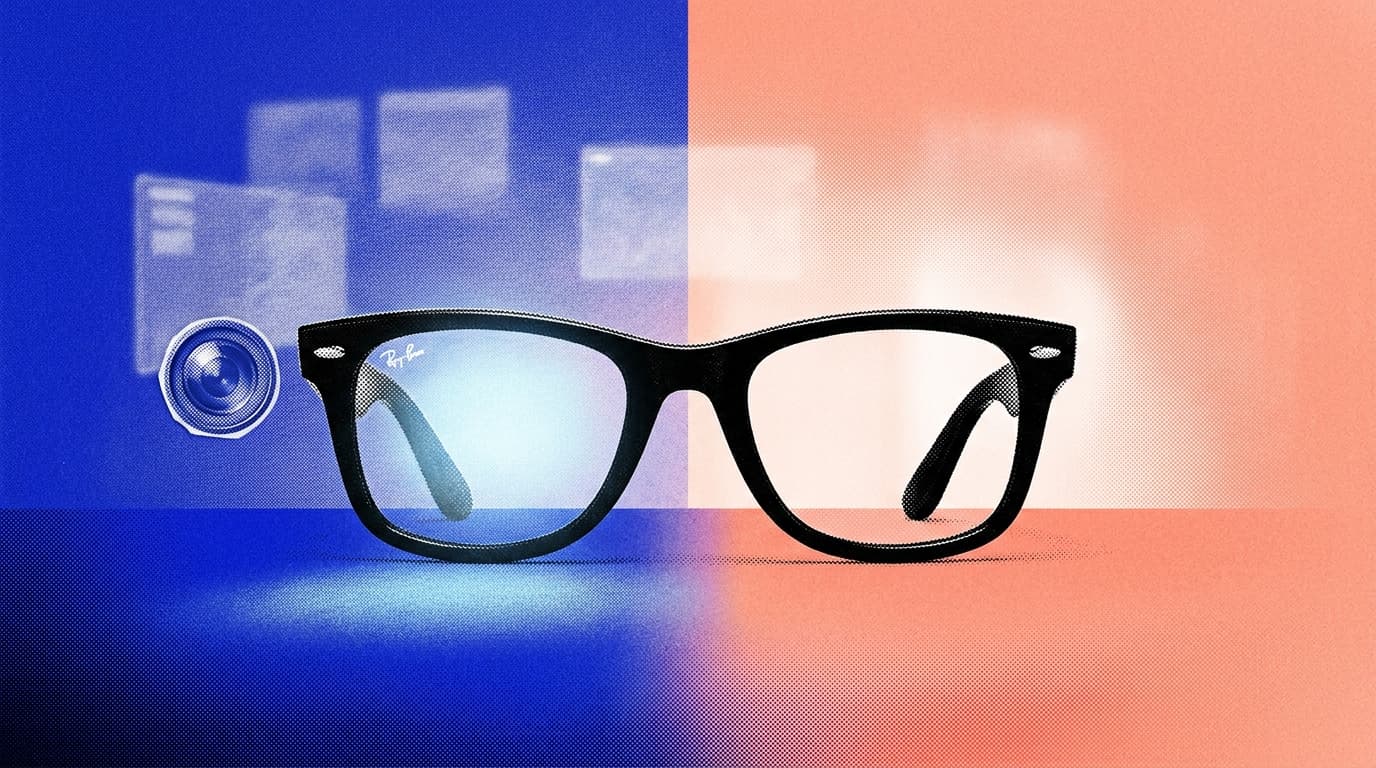
Meta's glasses sales tripled last year. Apple hasn't shipped a single pair. Both companies think they're going to win.
On the Meta side, the numbers are hard to argue with. Mark Zuckerberg called Ray-Ban Meta glasses "some of the fastest growing consumer electronics in history" during Q4 earnings, and Meta captured 72.2% of the XR market in 2025 as the overall category grew 44.4%. In September, it launched the Ray-Ban Display at $799 — its first glasses with an actual screen — paired with an EMG wristband that reads muscle signals so you can control things without touching anything. EssilorLuxottica is expanding the lineup further with two new prescription-ready models at $499.
Zuckerberg's vision is clear: "Glasses are going to be able to see what you see, hear what you hear, talk to you and help you as you go about your day." Meanwhile, Meta Quest headset shipments fell 42.3% last year — the company is going all-in on faces, not foreheads.
Apple is playing a completely different game. Leaked designs reported by MacRumors suggest glasses that look like regular glasses — no display, heavy emphasis on design. That lines up with what we previously reported: Apple is prioritizing cameras and audio over screens, leaning on Siri and its Gemini integration for the intelligence layer.
The strategic divergence is real:
- Meta is building an AI-first face computer. Cameras on, always listening, feeding everything to Meta AI. The glasses are the product.
- Apple appears to be building a fashion accessory that happens to have AI capabilities, with privacy as the selling point rather than an afterthought.
And privacy is exactly where Meta's strategy gets complicated. Earlier this year, whistleblowers revealed that Meta had been harvesting Ray-Ban user videos and sending them to human contractors for AI training, including sensitive content recorded accidentally. The company also internally developed a facial recognition feature called "Name Tag" that would identify people in real time. As these devices get more capable and more people wear them in public, that's a liability waiting to grow.
Here's what's interesting: display-less smart glasses already represent the majority of XR shipments, and display-enabled glasses aren't expected to outsell VR/MR headsets until 2027. Apple's no-display bet aligns with where the market is right now. Meta's display push is a bet on where it's going. Both could be right — just on different timelines.

Meta has the numbers, the distribution, and the momentum. Apple has none of the market share, but it has something Meta has struggled to earn: the benefit of the doubt on privacy. The question is whether Apple can ship something compelling before Meta's lead becomes insurmountable. If the Siri overhaul keeps slipping and Apple's glasses arrive without a credible AI experience behind them, all the privacy goodwill in the world won't close the gap. Meta learned from putting too much tech on people's faces with VR headsets. Apple's risk is putting too little.

PRODUCTS
OpenAI crossed $100 million in ChatGPT ad revenue in just six weeks. Impressive — until you look at the performance.
Since launching ads for free and low-cost tier users, OpenAI has signed more than 600 advertisers. But the clicks aren't following. An Adthena analysis of 29 million queries found ChatGPT ads averaging a 0.91% click-through rate — Google Search pulls 6.4% in the same categories. The pricing gap is just as stark:
- CPM: ChatGPT charges roughly $60 CPM, about three times Meta's average and well above Google Search.
- Minimum buy-in: Early pilot access required $200,000, though that reportedly dropped to $50,000 in April.
- Spend problems: One enterprise advertiser in the early pilot burned just 3% of a $250,000 budget over several weeks because the platform couldn't deliver enough impressions to spend the rest.
OpenAI has framed the ads as a way to keep ChatGPT accessible, not as a revenue play, and says ads never influence the chatbot's answers. Anthropic, meanwhile, has argued that advertising fundamentally doesn't belong in AI conversations.
The $100M headline sounds like validation, but click-through rates seven times lower than Google and advertisers who literally can't spend their budgets tell a different story. This looks less like the foundation of an ad business and more like brands paying a premium to be early — ahead of OpenAI's planned IPO later this year. The real test isn't whether advertisers show up. It's whether they renew once the performance data settles.

WORKFORCE
Companies keep mandating AI adoption. Nearly a third of workers are responding by sabotaging it.
A survey from Workplace Intelligence and enterprise AI platform Writer (which has a commercial interest here, but the findings track with broader trends) found that 29% of employees admit to deliberately undermining their company's AI strategy — feeding data into unapproved tools, using unsanctioned apps, or flat-out refusing to use what they've been told to adopt. Gen Z leads at 44%.
The threats behind these mandates are real: 60% of companies plan to lay off employees who won't adopt AI, and 77% won't consider non-proficient workers for promotions. But the strategy driving those threats? Leadership doesn't even believe in it.
According to Writer's enterprise AI report:
- 75% of executives say their company's AI strategy is "more for show" than real guidance
- Nearly half call the entire effort a "massive disappointment," up from 34% last year
- 69% of companies are planning AI-related layoffs — while 39% lack a formal strategy to make money from the tools in the first place
So workers are being threatened with termination over a strategy their own bosses admit is performative. And as HR Dive reported, those broad AI goals from leadership rarely translate into actual guidance on the ground — leaving workers to guess, hit one bad experience, and revert to old routines.
Rather than rethinking the rollout, most companies are doubling down on the workers who already get it. The survey found that 92% of C-suite executives are cultivating a class of "AI elite" employees who are roughly three times more likely to have been promoted. The gap between super-users and everyone else is widening fast.
You can't threaten people into using tools they don't understand under a strategy the C-suite itself calls performative and expect anything other than resentment. The companies that get real returns from AI will be the ones that treat it as a collaboration problem, not a compliance one — with genuine training and an honest answer to the question nobody at the top seems willing to ask: what exactly are we trying to do with this?

IN OTHER NEWS
What else happened today
- +Amazon to invest up to $25 billion more in Anthropic on top of its existing $8B, while Anthropic commits $100B to AWS over the next decade
- +GitHub banned an engineer who used an AI agent to ship 500 pull requests to major open-source projects in 72 hours — some of them got merged by Kubernetes and Hugging Face maintainers
- +NSA is reportedly using Anthropic's Mythos AI despite the Pentagon blacklisting the company as a supply chain risk
- +Sergey Brin told DeepMind employees in a memo that Google needs to catch up to Anthropic on AI coding and that "every Gemini engineer must be forced to use internal agents"
- +CEO of $1.5 billion AI startup iLearning charged with massive fraud by the DOJ — the company allegedly faked $421 million in revenue in a single year
- +A Purdue professor accused 200+ CS students of using AI to cheat, causing more than half the class to drop — the university ultimately dropped all the allegations
- +Tesla launched unsupervised robotaxis in Dallas and Houston days before its earnings report — the service went unavailable almost immediately
- +Google is building new custom AI chips with Marvell dedicated to inference, directly challenging Nvidia's dominance
WHO'S HIRING IN AI
- +Google DeepMind — Philosopher (Machine Consciousness & AGI Readiness)
- +Microsoft AI — Senior Data Privacy & Governance Engineer
- +Abbott — Senior Director, AI Strategy, Governance and Transformation
- +Disney Entertainment & ESPN — Sr. Product Manager, Ads AI/ML
AI TOOLS
What our editors are paying attention to today
Littlebird(Sponsored) — Think of it as an AI that actually knows what you're working on. It watches your screen, takes notes in your meetings, and remembers all of it. So when you forget where you saw something, you just ask.
Clico(Sponsored) — A free add-on that puts a writing helper directly inside Gmail, Google Docs, LinkedIn, and wherever else you type — no more copying your email into another tab and pasting the answer back.
Claude Design — Anthropic's new AI design tool lets you create prototypes, pitch decks, and marketing materials by describing what you want in plain text — Figma's stock dropped 7% on the news
Codex Chronicle — OpenAI's desktop app now watches what's on your screen and builds memories so it can help with what you're working on without you having to explain everything from scratch
Google Gemini Desktop — Google launched a Mac desktop app for Gemini with window sharing, a new text-to-speech model in AI Studio, and automated workflows in Chrome
Waymo x Waze — Waymo's robotaxis are now automatically detecting and reporting potholes to cities for free through a new partnership with Waze, starting in five metro areas
Claude Code Routines — Anthropic now lets you schedule AI coding tasks that run in the cloud on a timer — no need to keep your laptop open or a server running
That's all for today. If this issue made you think, share it with someone who needs to think harder.
Written by the Thorium Valley Crew
Enjoyed this newsletter?
Get daily AI briefings delivered straight to your inbox.
That's all for today's Thorium Valley. See you tomorrow.